Pool Deck Cleaning in Jacksonville, FL
For Jacksonville properties, regular pool deck cleaning can help maintain a cleaner appearance and improve traction around the pool area. It’s one of several services covered on our homepage.
Why Pool Decks Get Dirty and Slippery Fast
Pool decks face conditions that can cause buildup faster than many other outdoor surfaces. Common sources include:
- Algae and mildew: Moisture and humidity can encourage organic growth.
- Mold: Damp, shaded areas may develop mold and other biological buildup.
- Sunscreen and body oils: These can leave residue on areas frequently used by swimmers.
- Chlorinated water: Repeated splashing can contribute to mineral and surface deposits.
- Hard water: Mineral-rich water can leave white or cloudy stains.
- Leaves and organic debris: Leaves, pollen, and other debris can collect around the pool.
- Bird droppings: These can leave stains and organic residue.
- Shade and moisture: Areas that dry slowly are more likely to develop buildup.
This combination can make a pool deck look dirty and may reduce traction when the surface becomes wet.
Is It Safe to Pressure Wash Near a Pool?
Yes, you can safely pressure-wash the pool area when you plan the job properly. The main concern isn’t just the water pressure. It is controlling runoff, cleaning products, overspray, and contact with pool equipment and pool water.
Pool Water and Chemical Safety
Do not intentionally direct cleaning solutions into the swimming pool. Some cleaning products can affect pool chemistry if enough enters the water. For this reason, select cleaning products carefully and apply them in a controlled manner.
Before cleaning, the pool area should be assessed for:
- Pool water location
- Drainage paths
- Wind direction
- Nearby plants
- Pool equipment
- Skimmers and drains
- Electrical components
- Furniture and other items
The goal is to clean the surrounding surface while minimizing unwanted chemical and dirty-water entry into the pool.
Runoff and Drainage
Pressure washing produces wastewater containing dirt, organic material, and potentially cleaning products. Clean pool decks with the surrounding drainage system in mind. Do not simply push water toward the pool.
Where practical, direct runoff to an appropriate drainage area while protecting landscaping and other nearby surfaces.
Protecting Pool Equipment
Pool equipment can include pumps, filters, heaters, electrical components, lighting, skimmers, and other systems. Avoid directing concentrated pressure or cleaning solutions toward sensitive equipment.
Pool lights, electrical connections, skimmers, drains, and equipment areas should receive extra care during cleaning.
Pool Deck Surface Types and Cleaning Methods
Not every pool deck should be cleaned in exactly the same way.
Concrete Pool Decks
Concrete is one of the most common pool deck materials. It can collect dirt, algae, mildew, sunscreen residue, and mineral deposits. A suitable surface cleaner and controlled pressure can clean large concrete areas evenly. Older concrete, cracked surfaces, painted areas, and decorative coatings may require a gentler approach.
Stamped Concrete
Stamped concrete has a decorative pattern designed to resemble materials such as stone or brick. Aggressive pressure can damage the surface or existing protective coating. Cleaning should account for the condition of the stamped finish and any sealer already applied.
Paver Pool Decks
Pavers can collect dirt and organic growth in the joints as well as on the surface. Cleaning can remove surface buildup, but excessive pressure may disturb joint sand or damage older pavers. After cleaning, some installations may need joint material replaced.
Travertine and Natural Stone
Travertine and other natural stones require careful cleaning. Strong pressure or unsuitable chemicals can damage the stone or affect its appearance. Select the cleaning method based on the stone type, finish, age, and condition.
Pool Coping
Pool coping forms the edge around the swimming pool. It may be made from concrete, natural stone, brick, or other materials. Because it sits directly beside the water, cleaning requires careful control of pressure, chemicals, and runoff.
Wood and Composite Decking
Wood and composite decking shouldn’t be treated like concrete. Wood can be damaged by excessive pressure, while composite materials have their own manufacturer’s cleaning requirements. A lower-pressure method is often more appropriate.
Slip Resistance and Pool Safety
A clean-looking pool deck is not the only goal.
Algae, mildew, dirt, and organic residue can make wet surfaces less comfortable and reduce traction for bare feet. This matters most around steps, entrances, and other frequently wet areas of the pool deck. Cleaning removes surface buildup that may contribute to slippery conditions.
However, pressure washing does not guarantee a permanently slip-resistant surface. Existing coatings, surface texture, drainage, and the material itself also affect traction.
Non-Slip Coatings and Sealers
Some pool deck surfaces can benefit from a suitable sealer or non-slip coating. The product must be compatible with the existing surface and intended for pool-area use. Don’t apply a sealer just because the deck has been pressure washed.
Pool Deck Pressure Washing Equipment and Methods
Pool decks generally require more controlled cleaning than large, heavily soiled driveways. Important equipment can include:
- Pressure washer with adjustable pressure
- Surface cleaner for suitable flat surfaces
- Appropriate spray nozzles
- Low-pressure rinsing equipment
- Surface-safe cleaning solutions
- Degreasers for suitable stains
- Protective equipment
- Runoff-control tools when needed
The cleaning principle is simple: use enough cleaning power to remove the buildup without using unnecessary pressure. For organic growth, the cleaning solution may do much of the work while lower-pressure water removes the loosened material.
Our Pool Deck Cleaning Process
Inspect the Pool Area
The first step is checking the deck material, surface condition, stains, organic growth, drainage, coping, nearby equipment, and other sensitive areas.
Prepare the Area
Remove pool furniture, toys, umbrellas, and other movable items from the cleaning area. Consider sensitive equipment and nearby landscaping before washing begins.
Pre-Treat the Surface
Heavy algae, mildew, grease, or other buildup may require an appropriate pre-treatment. Use a product suitable for the surface and follow the directions.
Clean With Controlled Pressure
Select the pressure and nozzle based on the surface. A surface cleaner can be used on appropriate flat areas to help produce consistent results.
Rinse Carefully
We rinse the area while keeping runoff and overspray away from the swimming pool and sensitive equipment whenever possible.
Inspect the Finished Surface
After cleaning, the deck is checked for remaining stains, missed areas, damaged sections, and spots that may require additional treatment.
Pool-Safe and Environmentally Responsible Cleaning
Pool-area cleaning requires more attention to cleaning products and runoff than an ordinary outdoor surface. A responsible cleaning process should:
- Use only the necessary amount of cleaning solution.
- Avoid intentionally directing chemicals into the pool.
- Protect nearby plants and landscaping.
- Keep cleaning products away from sensitive equipment.
- Consider where wastewater will flow.
- Use surface-appropriate products.
- Follow product label instructions.
“Pool-safe” should not mean that every cleaning chemical can enter the swimming pool. The safest approach is to prevent unnecessary contact with pool water.
What Else Can Be Cleaned Around a Pool?
Pool-area cleaning may also include other outdoor surfaces and items when appropriate. Depending on the material and condition, these can include:
- Pool coping
- Pool steps
- Diving boards
- Pool deck furniture
- Pool cage and screen areas
- Walkways around the pool
- Outdoor seating areas
Clean each item according to its material rather than using the same pressure setting everywhere.
How Often Should You Clean a Pool Deck in Florida?
No single cleaning schedule fits every pool deck.
For many Jacksonville homes, annual pool deck cleaning can be a useful starting point. Some properties may need more frequent cleaning because of shade, heavy pool use, rainfall, surrounding trees, or faster organic growth. A pool deck that stays damp or receives limited sunlight may develop buildup sooner than a dry, sunny deck. Regular inspection is more useful than following a rigid schedule.
Signs Your Pool Deck Needs Cleaning
Check the pool area for signs that cleaning is needed. Common visual and safety indicators include:
- Green or dark buildup
- Discolored concrete
- Visible mildew or algae
- White mineral deposits
- Sunscreen or body-oil residue
- Heavy dirt around pool entrances
- Stains around coping
- A surface that feels unusually slick when wet
- Organic debris buildup
Cleaning can restore the pool area’s appearance and remove surface contaminants.
Why Jacksonville Homeowners Choose Us for Pool Deck Cleaning
A locally owned pressure washing company built on clear pricing, careful work, and reliable scheduling for Jacksonville homes and businesses.
More Residential Services
Explore our other exterior cleaning services for Jacksonville homes.
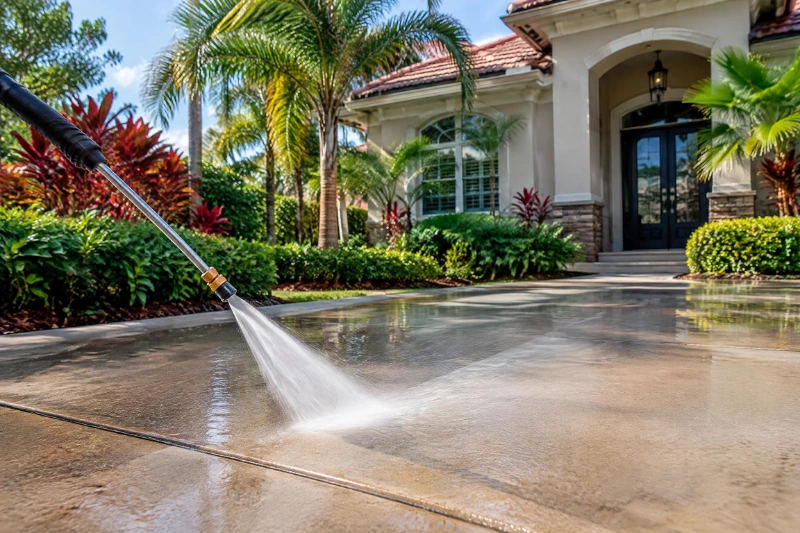
Driveway Pressure Washing
Driveways collect dirt, algae, tire marks, and other buildup. Professional cleaning helps restore the appearance of the surface.
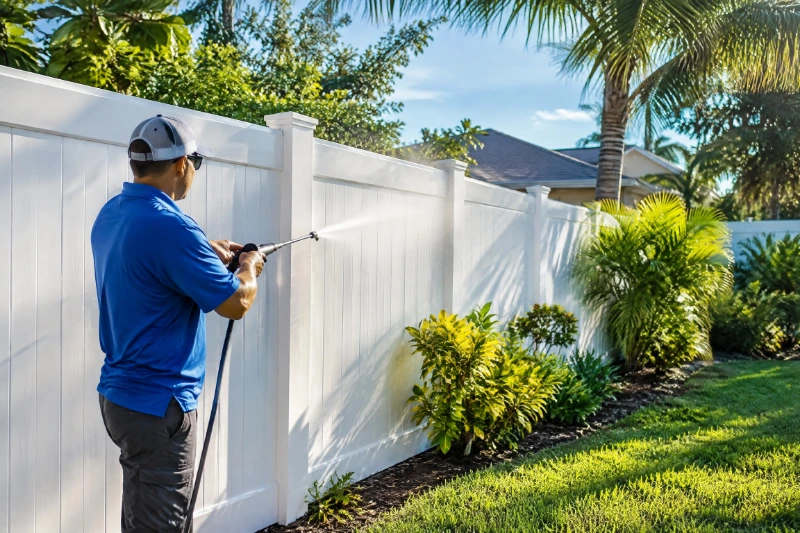
Fence Pressure Washing
Fence surfaces collect dirt, algae, and weather-related buildup. The right method helps refresh their appearance.
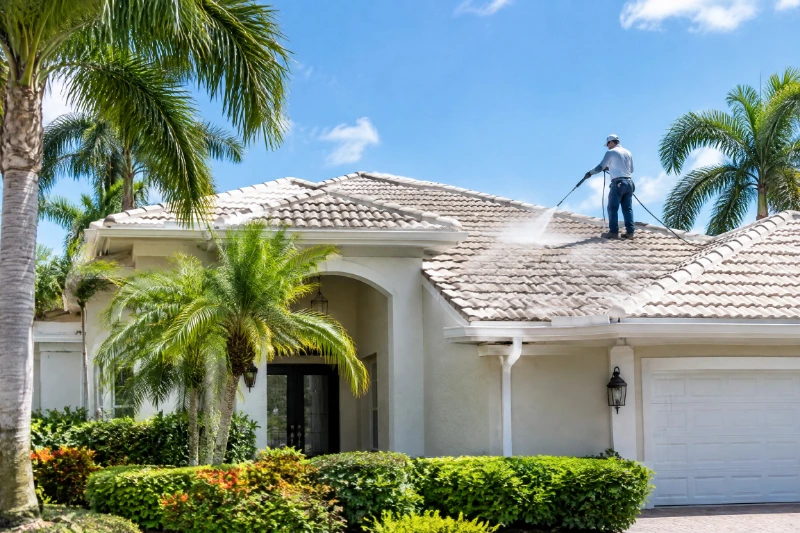
Roof Soft Washing
Roof surfaces can develop organic growth and discoloration. Soft washing is used for suitable roof materials.
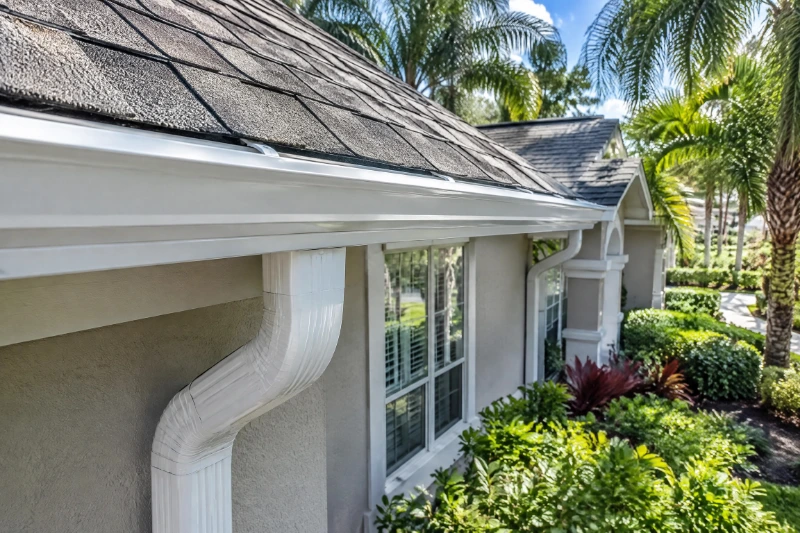
Gutter Cleaning
Leaves, pine needles, dirt, and other debris can collect inside gutters and downspouts. Gutter cleaning removes this buildup and helps keep the drainage system working properly.
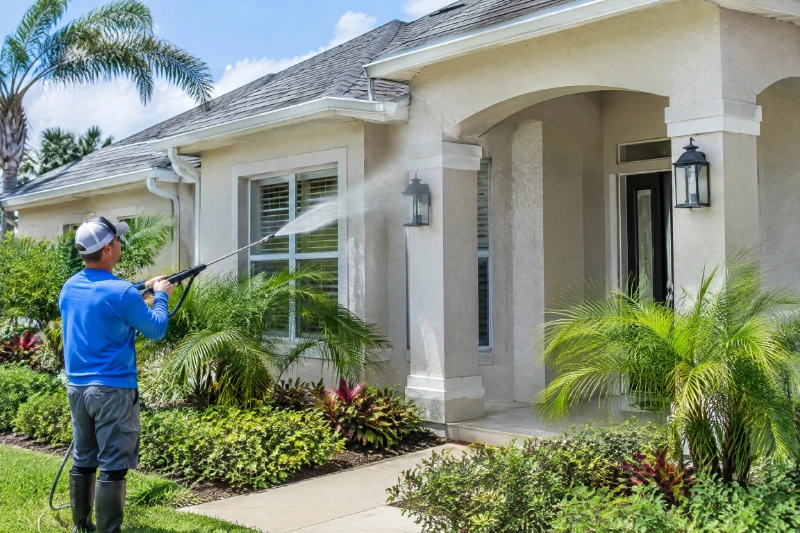
House Washing
Exterior walls collect pollen, dust, mildew, algae, and general outdoor grime. House washing cleans suitable siding, brick, stucco, and other exterior materials using the appropriate method.
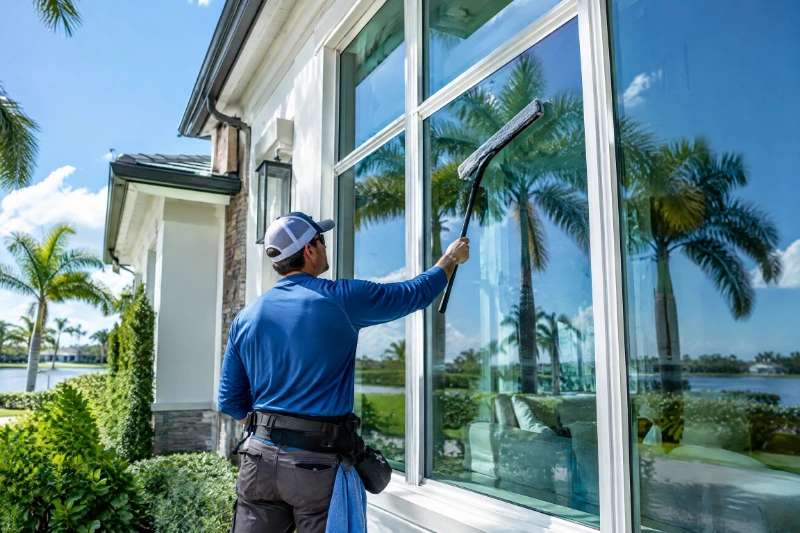
Window Cleaning
Exterior windows can collect pollen, dust, water spots, and other residue. Professional window cleaning helps improve glass clarity and the appearance of the home’s exterior.
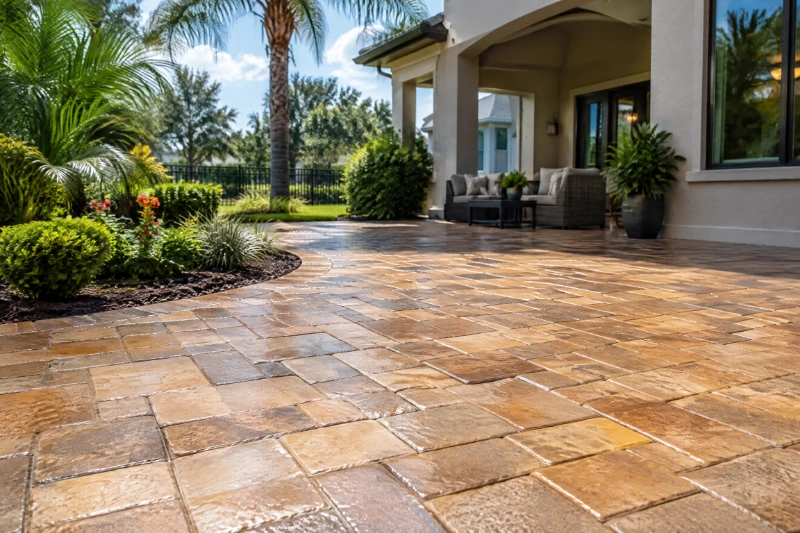
Paver Sealing
Paver sealing protects suitable paver surfaces after proper cleaning and preparation. It can help maintain color, reduce moisture absorption, and protect joint sand.
Pool Deck Cleaning FAQ
Does pressure washing hurt my pool water?
It can affect pool water if dirty water or cleaning chemicals enter the pool. Proper cleaning practices minimize this risk by controlling spray, runoff, and cleaning products around the pool.
Can I pressure wash near my pool?
Yes. You can pressure wash pool decks and surrounding surfaces when the equipment, pressure, nozzle, and cleaning method are appropriate for the surface. Take extra care around pool water, coping, skimmers, lights, drains, equipment, and landscaping.
Is it safe to swim right after pool deck cleaning?
Wait until the cleaning is finished, the deck is thoroughly rinsed, and any cleaning products used around the pool have been managed according to their instructions. If you have concerns about pool water chemistry, test the water before swimming and adjust it as needed.
How long does a pool deck take to dry?
Drying time depends on temperature, humidity, sunlight, wind, drainage, and the surface material. Jacksonville’s humidity can slow drying compared with hot, dry conditions. Let the deck dry properly before normal use.
Do I need to drain or cover the pool first?
Usually, you don’t need to drain the pool for pool deck cleaning. However, plan the cleaning process to limit overspray and runoff entering the pool. Protect sensitive equipment and nearby areas as needed.
Get a Pool Deck Cleaning Estimate
Make your pool deck safe and spotless with a fast, free cleaning estimate.
Request a Free Quote